Despite emerging risks, Ghana is widely considered one of the most investor-friendly and stable regions for gold mining in West Africa. In comparison, political instability and resource nationalism in countries including Niger, Burkina Faso, and Mali have made this environment significantly riskier. While galamsey (illegal artisanal mining) continues to represent a challenge in Ghana, new regulations and enforcement mechanisms are being implemented to mitigate it.
History of Gold Mining in Ghana
Ghana has a long gold mining history, dating back to the 10th century. In the early 19th century commercial mining was established, with several mines beginning operations during the colonial period. Obuasi was the site of the first documented large-scale gold mine, where precious metal was discovered in 1897. By 1900, Ghana had become one of the British Empire’s major gold suppliers and was known as the Gold Coast.
As of 2019, Ghana was the largest producer of gold in Africa, renowned for its gold resources. Major mining activities and gold discoveries have centered in the Ashanti region, along with other areas including Akyem, Tarkwa, and Prestea. The country remains a major gold-producing player on the world stage, with companies including Afrimex, headquartered in Accra, continuing to operate successful mines.
A Relatively Safe Haven
Ghana’s mining code, legacy legal framework, and functioning democracy strengthen its status as a relatively safe haven for gold mining investors, and junior and mid-tier developers, compared to other countries in West Africa. Furthermore, Ghana’s permitting system is relatively robust, and its fiscal terms are well understood. The country also has a strong track record of successfully converting exploration-stage projects into gold-producing mines, with mining companies in the country (unlike in Burkina Faso and Mali) having legal recourse open to them should a dispute occur.
Augmenting Ghana’s Gold Reserves
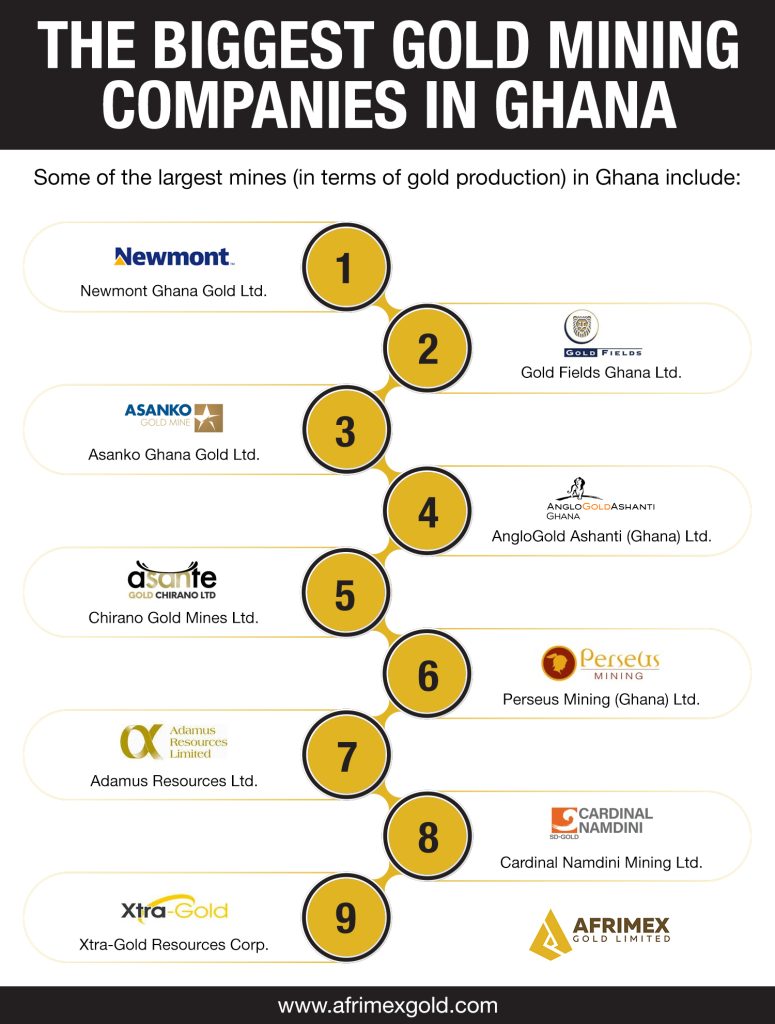
GoldBod (the Ghana Gold Board) reached an agreement in early 2025 with a further nine large-scale mining companies to buy 20% of their gold production. This move aims to augment the country’s foreign and gold reserves via the Bank of Ghana’s domestic gold purchase program. The deal includes additional mining companies that weren’t part of the bank’s initial scheme, namely Akroma Gold, Adamus Resources, Cardinal Namdini Mining, Earl International Group, Golden Team Mining, Gan He Mining Resource Development, Goldstone Akrokeri, Xtra Gold Mining, and Prestea Sankofa Gold.
As part of this agreement, the mining companies commit to delivering 20% of any gold they wish to export to GoldBod at the designated collection point (the Assay Laboratory of the GoldBod at the Kotoka International Airport) in the form of doré bars.
